Conference Talk „The Human Factor. Cybersecurity’s Weakest Link or Most Adaptive Defense?”
On May 5th and 6th, 2026 the annual Security Forum organized by the Hagenberger Kreis took place in Hagenberg. Our colleagues Yvonne Bauer and Wolfgang Ettlinger held the opening talk on the second day. In this talk, they gave a deeper look on the critical role of human behavior in cyber defense and how it reframes defense strategies beyond purely technical or machine-driven approaches.
Once the narrative has been created that the human is the problem, you stop looking for better explanations.
And this narrative shapes everything:
- How we design systems
- How we train people
- How we assign blame
Human cognition acts as complementary system, not just a weak link. This creates a hybrid model, where adaptive human-decision making works in tandem with machine efficiency.
One of its core strengths lies in pattern recognition and contextual understanding. Security analysts are often able to spot unusual behaviors or subtle anomalies that automated systems might overlook. Like the immune system, humans are capable of adaptability, adjusting strategies quickly in response to emerging threats. In addition, they bring ethical judgment and strategic decision-making, enabling a nuanced evaluation of risks that goes beyond metrics and algorithms.
However, the human factor also introduces vulnerabilities. Alert fatigue and cognitive overload can reduce vigilance, leading to missed threats.
Cognitive biases often cause individuals to underestimate rare but catastrophic risks or to place excessive trust in automation.
Routine blindness may result in subtle anomalies being ignored when tasks become repetitive.
Furthermore, poor collaboration and information silos weaken collective intelligence, while misguided prioritization – such as choosing convenience over security – can undermine defense efforts.
Yet, to fully leverage the strengths like pattern recognition, intuition, adaptive reasoning and ethical decision making, organizations should minimize human error through training, supportive tools, and sustainable working conditions, ensuring that human intelligence can function as a powerful ally in defending against digital threats.
Key takeaways:
- Humans are more complex than fear-driven actors
- Security is a complex socio-technical system
- Humans are not just users
- Cybersecurity fails, because we frame humans incorrectly
- Cybersecurity is not solved by fear or trainings alone
- Cybersecurity success depends on alignment between the security team and the organization
- Cybersecurity not as a compliance issue but a system design problem: Well-designed systems enable better human decisions
This article is based on the talk by Yvonne Bauer and Wolfgang Ettlinger at the Security Forum 2026.
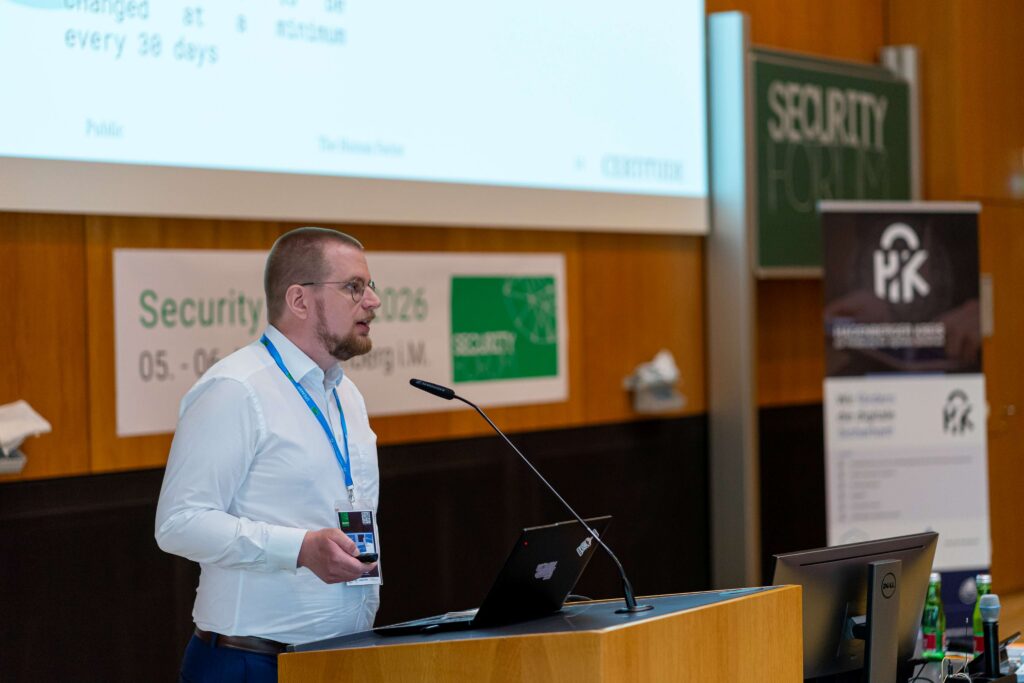
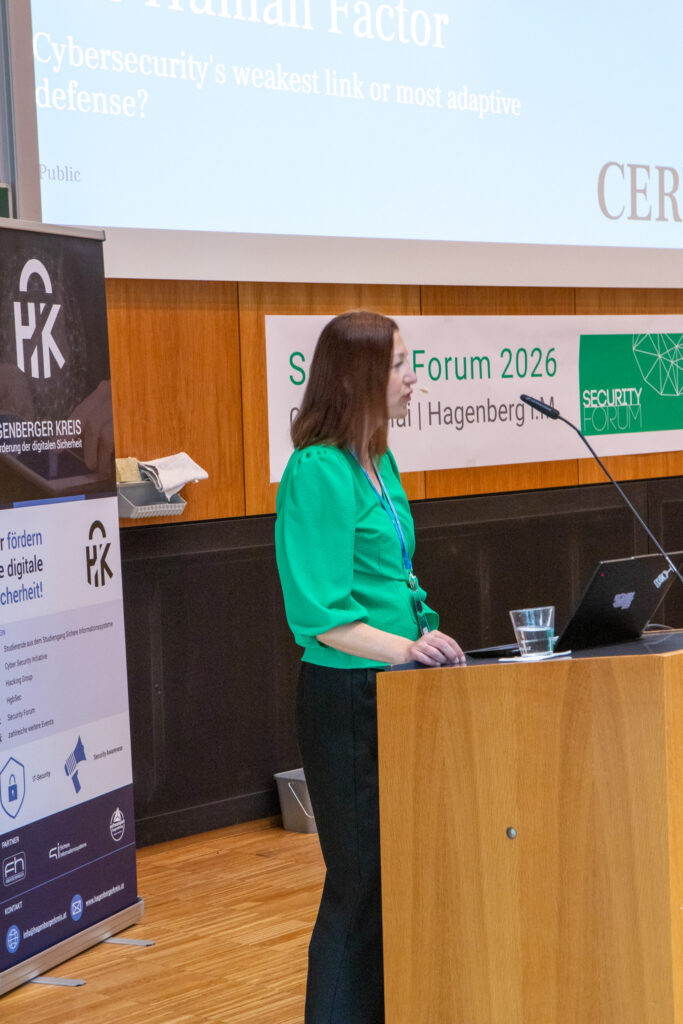
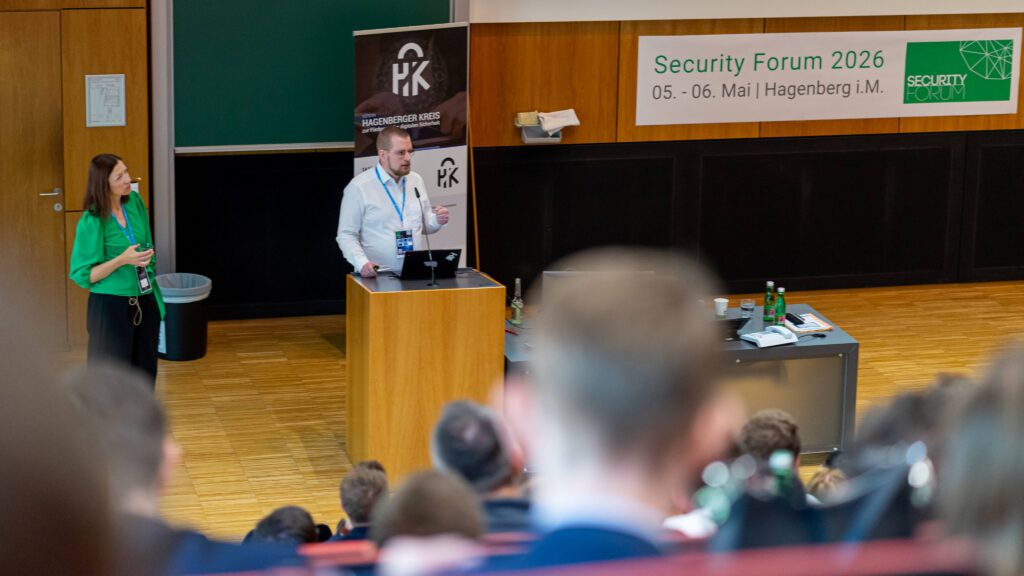
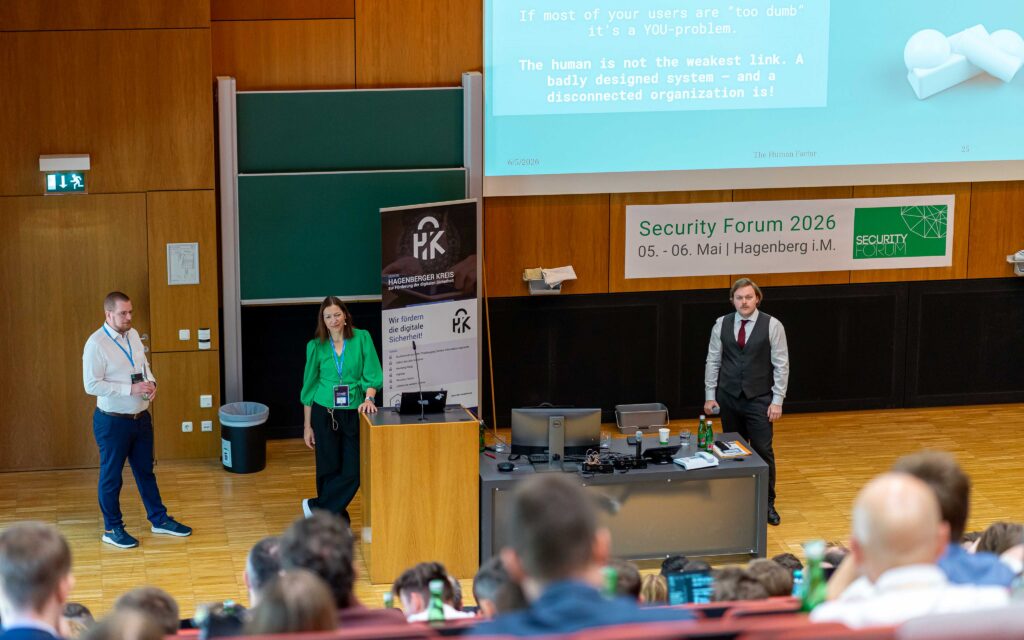
Fotos: Hagenberger Kreis zur Förderung der digitalen Sicherheit (Kraemer)
We would like to thank Hagenberger Kreis for the opportunity to contribute to this year’s Security Forum and for the valuable exchange with the cybersecurity community.
More impressions from the Security Forum and the presentation slides are available in the official review by the Hagenberger Kreis.