Autumn Talks 2026: Crisis Management and Geopolitical Change
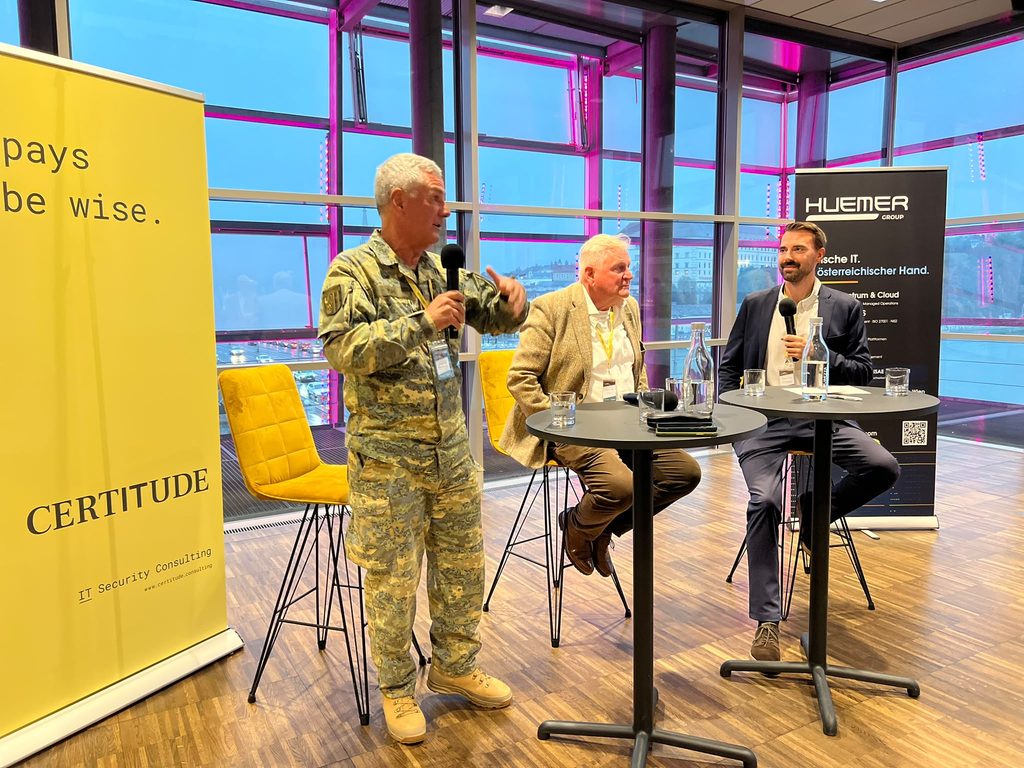
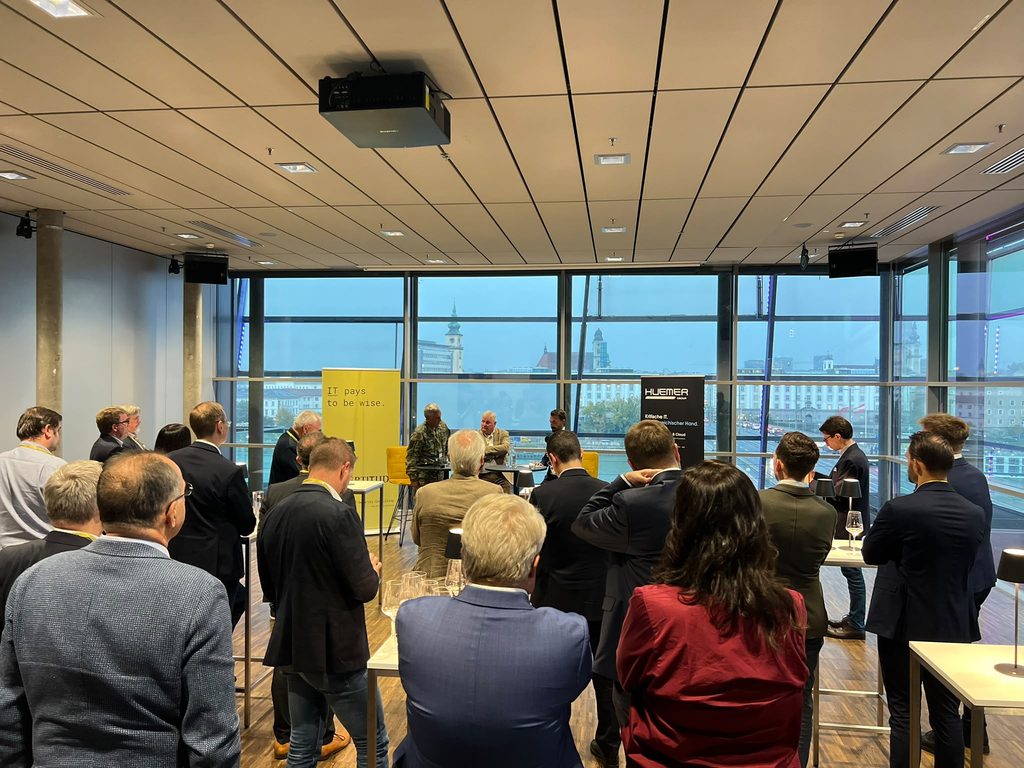
Who takes the lead when the power goes out, a cyberattack paralyses operations, or a crisis strikes without warning? This question was the focus of this year’s Autumn Talks on 21 October 2026 at the Ars Electronica Center in Linz, where we discussed it with our guests Brigadier Muhr, Military Commander of Upper Austria, and Brigadier (ret.) Pogutter, former City Police Commander of Linz. Marc Nimmerrichter, Managing Partner at Certitude, hosted the conversation.
Following the discussion, the evening concluded with a joint dinner and networking. Many thanks to our guests for the engaging exchange, to Brigadier Muhr and Brigadier (ret.) Pogutter, and to our event partner, the Huemer Group.
Selected topics from the discussion:
Crisis management begins with a realistic assessment of the threat landscape
Companies must analyse the threats to which they are exposed. The assumption that a company is not important enough to be targeted by attackers falls short. The discussion also addressed so-called hybrid threats, a combination of military, economic, technological and informational measures used to influence or weaken political, social and economic structures. Companies are also affected by these threats, regardless of their size or industry.
It is particularly helpful to distinguish the constants of a threat situation from the variables: What must be accepted as given, where can things be changed, and where are the tipping points?
What is a crisis, and who is in charge?
The deployment of the Austrian Armed Forces does not always constitute a crisis. Likewise, according to Brigadier (ret.) Pogutter, a registered demonstration is not a crisis, even if potentially violent participants are expected or the demonstration has to be dispersed. Applied to companies, a crisis occurs when an unforeseen situation arises that threatens the company’s existence, can no longer be handled by routine operational processes and has to be dealt with under time pressure.
If a crisis does occur, clear leadership is essential. In crisis management, decisions have to be made with insufficient information in an unclear situation. Employees must be able to trust decision-makers, and those who decide must not let their own uncertainty show.
Preparing for blackouts, power outages and cyber incidents
Crises call for preparation. This includes having plans in place for scenarios such as power outages, blackouts and cyber incidents, and regularly updating, training and exercising them. As a general principle, companies must strengthen their own resilience and should not rely on the state or other institutions to do so. On the contrary, in major crises the state depends on the resilience of businesses.
Planning the exit from a crisis
Brigadier Muhr also emphasised that crisis mode must be ended in good time. The right moment is easily overlooked, as the crisis can become convenient for those who profit from it, or decision-makers may grow accustomed to their expanded powers. History offers several cautionary examples of this, particularly among political leaders.
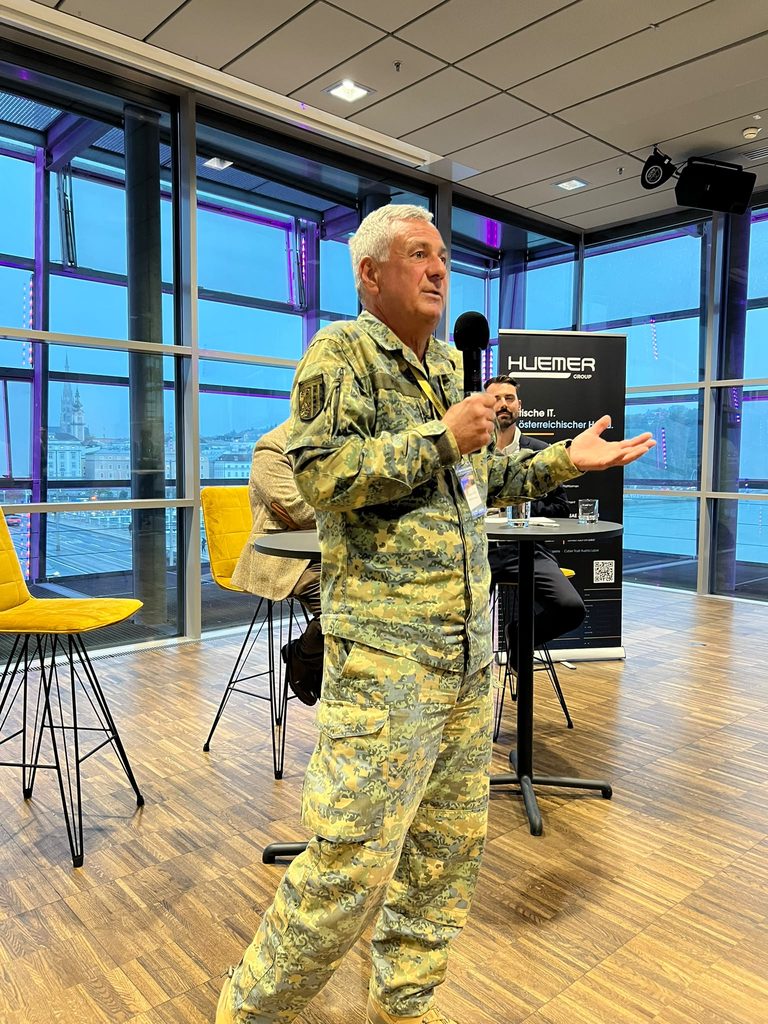
A few impressions from an engaging evening: